

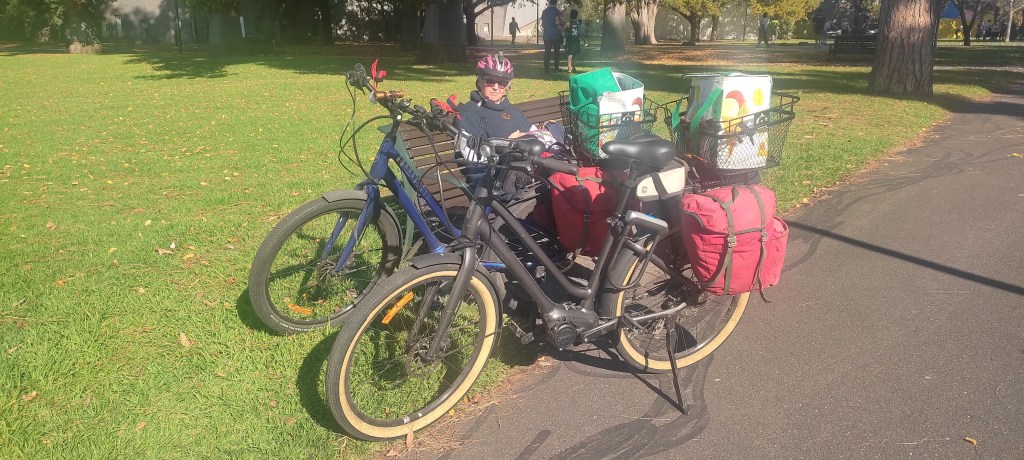
With wage stagnation and rising living costs, it can be helpful to explore ways of stretching the family purse. According to Angela Crunden of East Gippsland Climate Action Network, (EGCAN) a healthy option and one that reduces our carbon footprint is to walk and cycle more.
When travelling, Ms Crunden often identifies how pedestrians and cyclists are encouraged to walk and cycle, and how townships adapt to their cycle and foot traffic. “I’m a cyclist, a walker and a car driver but as much as possible I try to walk or ride. We are fortunate to have reasonable cycling infrastructure in Bairnsdale; pedestrians don’t fare nearly so well though”, she said.
“It’s fascinating to see how towns like Crystal Brook in country South Australia – a dot of a town, value its pedestrians highly by placing zebra crossings on just about every corner. Footpaths are wide and well maintained and tourist traffic is invited to set up camp not 75 metres from the local bakery. A friendly, sharing community feel seems to keep this little town ticking along,” Ms Crunden said.
Bendigo, like much of suburban Melbourne encourages cyclists to take up the whole lane when riding through roundabouts. They have large bike symbols stamped front and centre at the entrance of the roundabout. Drivers are visually forced to think that bicycles are an integral thing and that they need to watch out for them. It seems to slow the pace and make for considerate driving.
In just these two examples, walking and cycling are treated as valid forms of transport; they are overtly encouraged perhaps as a healthy option and as a safe alternative to driving. Our town of Bairnsdale could take note.
As the cost of living looms large for many people and as our health becomes more important as we age, strategies for encouraging these simple transport forms not only do good for our health, the planet will thank us too, Ms Crunden said.
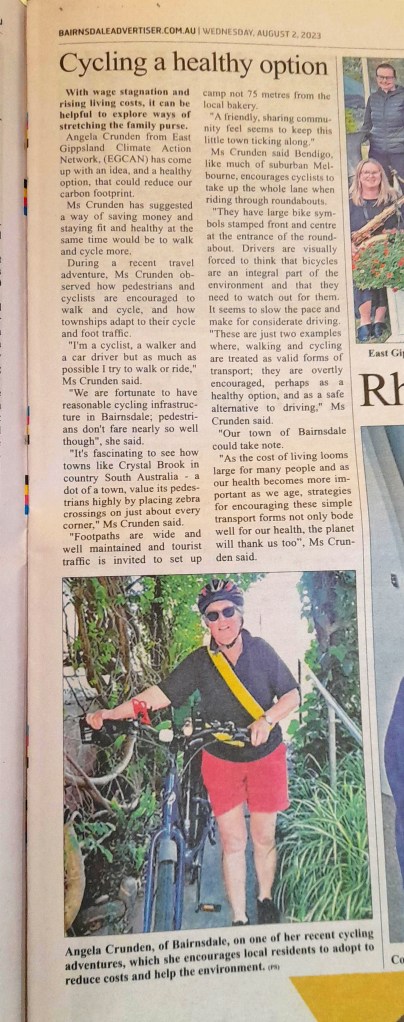
Story as published in the Bairnsdale Advertiser:
 Climate News